Legislation & Political Advocacy
How Parishes Can Engage in the Public Square
“The love and service of one’s country follow from the duty of gratitude and belong to the order of charity. Submission to legitimate authorities and service of the common good require citizens to fulfill their roles in the life of the political community” (Catechism of the Catholic Church, 2239).
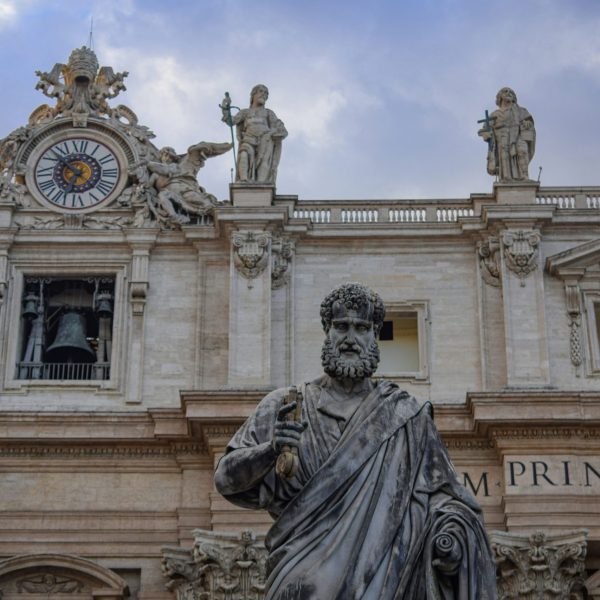
The Church's Role in Politics
As tax-exempt institutions, the Catholic Church, any parishes, and any affiliated organizations do not take or promote a partisan stance in politics. Instead, our faith in Jesus Christ and the teachings of His bride the Church inform how we act in the public square, how we vote, and how we treat political opponents. In this role, the Church teaches the faithful to weigh policies against Gospel values, encourage people to speak out against injustice and promote the common good, and urge citizens to vote and participate in their community. To learn more about Catholics’ involvement in the politics of our home state, visit the Catholic Conference of Illinois.
What We Can and Cannot Do
Catholics who represent the Church in an official capacity cannot endorse a particular candidate/political party or promote materials that ask others to endorse a particular candidate/party. Making donations to a candidate/party and offering the Church’s facilities to a candidate/party are likewise not legally permissible. What we can do, as Catholics in a professional capacity, is speak about the morality or immorality of human affairs and of various legislation. We can share with our fellow Americans how certain laws are just and should be defended and how others are unjust and should be fought against. The Church can openly promote (or reject) different forms of legislation, but it cannot endorse individuals or factions running for office.
Parishes should not distribute campaign literature or voter materials that are not first reviewed by the LiFE Office, unless these materials come from the U.S. Conference of Catholic Bishops or the Catholic Conference of Illinois. The LiFE Office is always willing to vet what parishes are considering distributing. Contact us at [email protected].

Forming and Informing Our Consciences
As practicing Catholics and diligent citizens, we are called to form and inform our consciences. Conscience is our rational judgment of the moral quality of an action (see CCC 1778). Our consciences are formed in part by our upbringing, friendships, and relationship with God. We can better develop our consciences by listening to God’s law in Scripture and in the Church’s teachings. Catholic Social Teaching should be the framework from which political issues are addressed. Catholic Social Teaching includes upholding human dignity and workers’ dignity, caring for the poor, and caring for God’s creation. Offering ourselves to be the kingdom of God, to allow Jesus to reside and rule within us, helps form a robust conscience. We should also inform our conscience by researching what candidates stand for, what they promote or fail to promote, and how that conforms to our beliefs.